A Family's £30,000 Gift in Memory of Their Parents Has Built a Gym for Homeless People in Reading
An anonymous family has donated £30,000 in memory of their late parents to build a professional outdoor gym at Willow House Lifehouse, the Salvation Army's homeless shelter in Reading — giving residents a free, on-site resource to build strength, relieve stress, and foster routine.
Analysis
When a family in Reading inherited more than they expected after the death of their parents, they did something quietly extraordinary. They contacted The Salvation Army's Philanthropy Department and said, simply, that they wanted to make a gift in memory of their parents — something local, something tangible, something that would make a lasting difference to people in difficult circumstances.
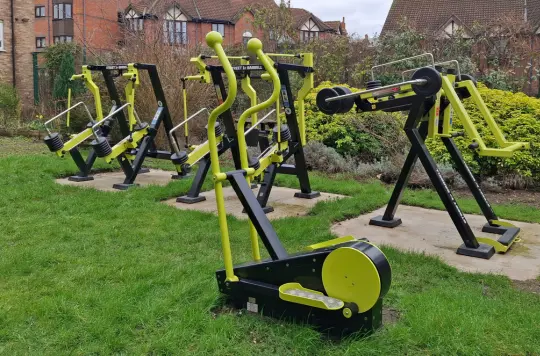
The result is a professional outdoor gym, now installed in the garden of Willow House Lifehouse, The Salvation Army's hostel for single adults and couples experiencing homelessness in Reading. Five commercial-grade weight and resistance units, carefully chosen by staff and residents together, alongside a cardio exercise bike. Free to use, on-site, available every day.
The family, who prefer to remain anonymous, explained their thinking with characteristic generosity: "We wanted to help those living locally in difficult situations, whose upbringing or circumstances have made life hard for them. We enquired about our local Salvation Army Lighthouse, as a local project where we could physically see our gift at work."
Saul Jalland, Service Manager at Willow House, was visibly moved: "They've invested not just in equipment, but in the health, dignity, and future of some of the most vulnerable people in our community." Through a mutual connection at the family's church, a personal trainer is now exploring the possibility of offering regular sessions to residents — a detail that speaks to how generosity, when it flows through community networks, tends to multiply.
This story matters for several reasons. It is a reminder that legacy giving and memorial philanthropy are not the preserve of wealthy estates or formal charitable foundations — they are available to any family that wants to honour the people they have loved by investing in the people who need it most. It is also a reminder of what Salvation Army Lifehouses actually are: not just places to sleep, but structured pathways out of homelessness, with emergency beds, assessment beds, longer-term accommodation, and a community hub where professional services gather. The gym is one more rung on that ladder.
"This is about more than fitness," says Jalland. "It's about providing hope, a sense of achievement, and a daily reason to feel good." That is the kind of sentence that deserves to be read slowly.