Young Hands, New Hope: How Middlesbrough Youth Are Transforming Their Community Space
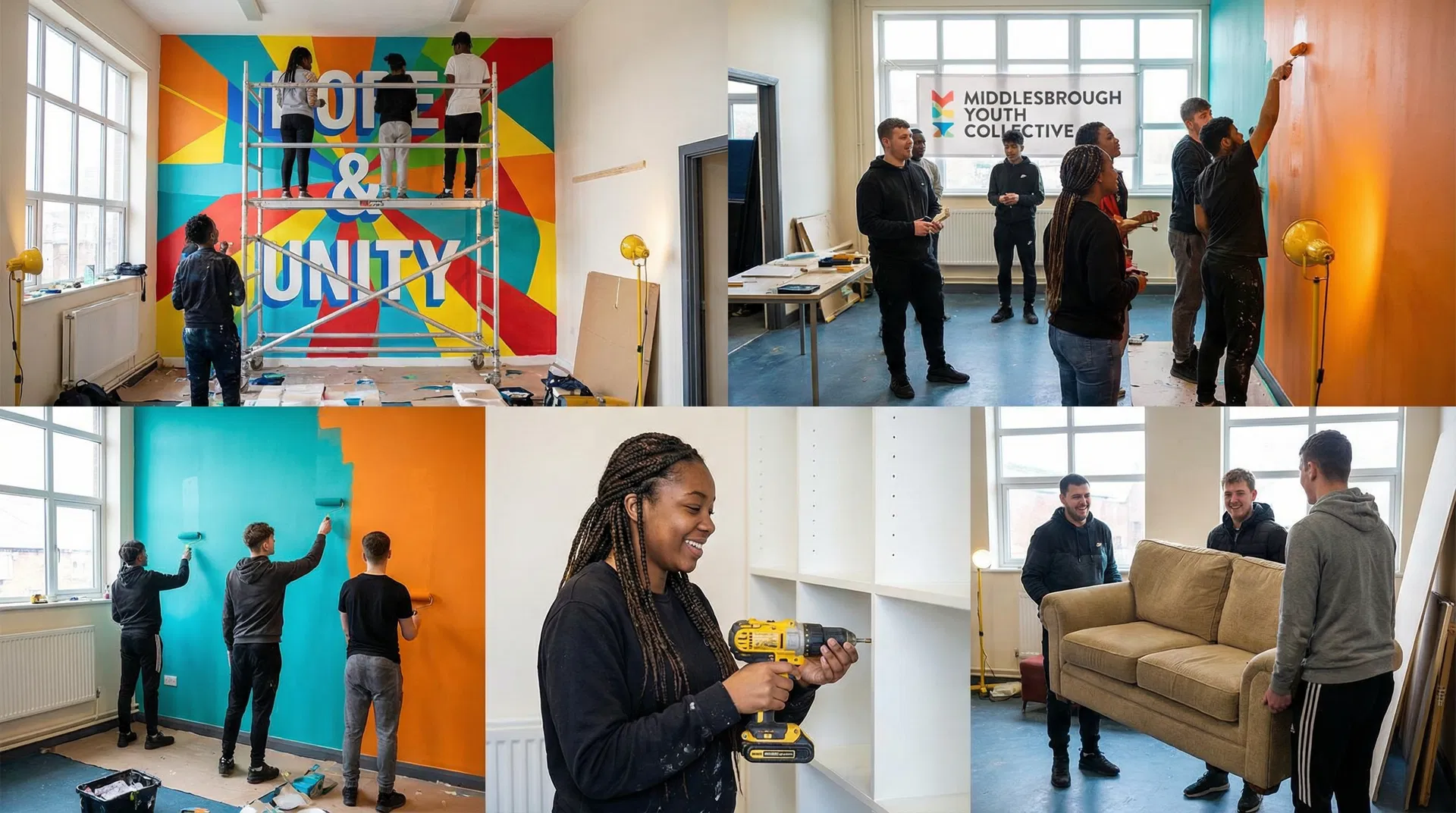
Young people from the Kings Trust Team Programme have transformed the Middlesbrough Salvation Army's community space, creating a welcoming environment for families and children. The project demonstrates how investing in youth leadership can revitalise community facilities and build belonging.
Analysis
There's something powerful about watching young people take ownership of their community. It shifts something fundamental—from a sense of disconnection or passivity to genuine investment in the places where they live.
That's what's happening in Middlesbrough, where young people from the Kings Trust Team Programme have been working with the Salvation Army to transform a community space. It's a small project in some ways—a group of young people improving a facility—but it carries enormous significance.
Let me explain why. In many communities, young people are positioned as problems to be managed rather than as assets to be invested in. We hear about youth crime, youth unemployment, youth disengagement. These are real issues, and they deserve serious attention. But they're only half the story. The other half is that young people are hungry for purpose, for belonging, for the chance to contribute meaningfully to their communities.
The Kings Trust Team Programme understands this. It's designed to give young people—particularly those facing barriers to employment or education—the chance to develop skills, build confidence, and make a tangible difference in their communities. And in Middlesbrough, that's meant partnering with the Salvation Army to create a space that families and children can enjoy.
What strikes me about this project is that it's not charity in the traditional sense. It's not adults doing something *for* young people. It's young people doing something *with* their community. They're not passive recipients of help; they're active agents of change. That distinction matters enormously.
When young people see themselves as capable of improving their community, something shifts. They develop a sense of ownership. They become invested in maintaining what they've created. They start to see themselves as people who can make things better, not just people who are struggling or failing.
For the Salvation Army in Middlesbrough, this partnership is equally valuable. Community spaces need to be vibrant, welcoming, and responsive to the people they serve. By involving young people in the transformation, the Salvation Army has created something that reflects the energy and creativity of the young people themselves. That's far more effective than any top-down redesign could be.
There's also something deeply Christian about this approach. Jesus was constantly challenging his disciples to see people differently—to see the outcast as valuable, the marginalised as worthy of dignity, the young as capable of wisdom. When we invest in young people, when we give them real responsibility and real voice, we're living out that conviction.
In a time when many young people feel disconnected from institutions—including churches—projects like this matter. They show that faith communities aren't just places where adults gather; they're places where young people can belong, contribute, and lead.
As we think about the future of our communities, both locally and nationally, we need more of this. We need more spaces where young people are invited to contribute. We need more organisations willing to hand over real responsibility to young people, to trust them with the work of community transformation. We need to see young people not as problems to be solved, but as partners in building the communities we want to live in.
The Middlesbrough Salvation Army and the Kings Trust Team Programme have shown us what that looks like. It's a model worth replicating.