Trussell: over 2.6 million food parcels distributed in 2025 as UK hunger crisis persists
New figures from Trussell reveal that food bank use remains 45% higher than pre-pandemic levels, with families and older people among the hardest hit — and the charity is calling on the government to act.
Analysis
More than 2.6 million emergency food parcels were distributed to people facing hunger and hardship across the UK in 2025, according to new figures released by Trussell on 11 March 2026. The numbers represent a 12% fall on 2024 — largely due to easing inflation — but remain 45% higher than before the pandemic and cost of living crisis.
For Trussell, the modest improvement offers little comfort. 'Today's figures show that too many people across the UK are still being pushed to the brink,' said Helen Barnard, Director of Policy and Research. 'Even as we gain hope from people getting back on their feet, we cannot lose sight of the heartbreaking injustice that such shocking numbers of people are still trapped in the grip of severe hardship.'
The data reveals some deeply troubling trends beneath the headline figure. Families with children received 62% of all food parcels in 2025, despite representing only 42% of the UK population. Perhaps most alarming is the rise in hardship among older people: support provided to those aged 65 and over more than tripled — a 247% increase — between 2019 and 2025.
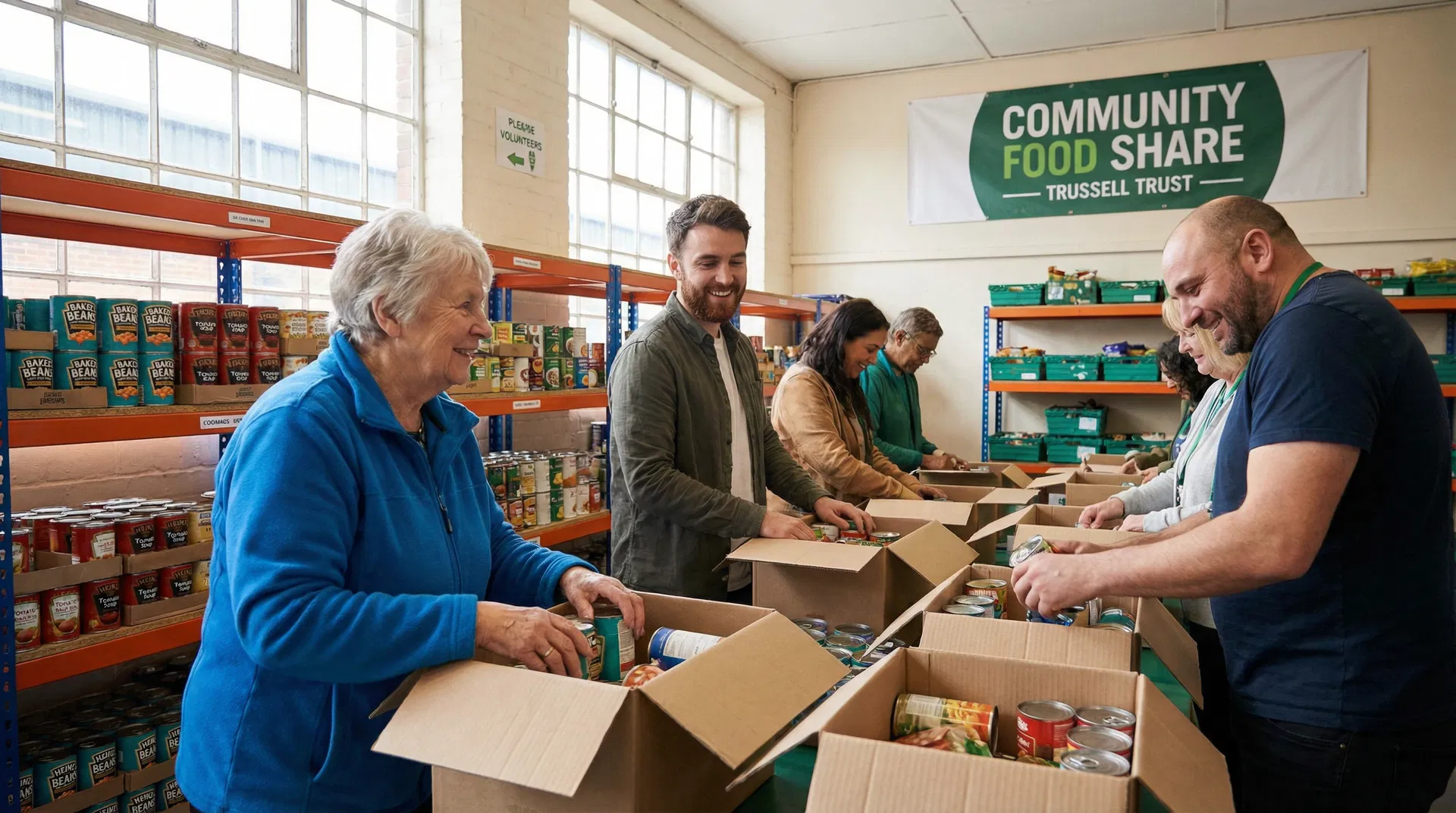
Food banks themselves describe the persistent need as 'appalling'. Volunteers report people sitting in the dark to save electricity, parents skipping meals to feed their children, and people in such desperate situations that they open food parcels to eat before leaving the food bank.
Amie, a 45-year-old single mother from North Lincolnshire, shared her experience: 'Making sure my children eat will always be my priority. It's a terrible state that we're in where in 2026 so many people have to use food banks. Everyone should have enough money to afford the essentials.'
Trussell is calling on the UK government to lift the freeze on Local Housing Allowance and establish an independent process to advise on minimum Universal Credit payments — moving towards what the charity calls an 'Essentials Guarantee'. The charity's position is clear: food banks are a lifeline, but they are not the answer. 'Hunger in the UK isn't a food problem,' as actor Christopher Eccleston put it in supporting the campaign. 'It's an income problem.'