The Hidden Link Between Climate Change and Food Bank Need — Trussell Trust Report
A new Trussell Trust report reveals the deep and often invisible connections between environmental change and food bank need in the UK. Climate change is estimated to add around £600 a year to household food bills — and low-income households are the most exposed.
Analysis
When we think about climate change, we tend to think about rising sea levels, extreme weather events, or the fate of distant ecosystems. But a new report commissioned by the Trussell Trust brings the issue much closer to home — to the kitchen tables and empty cupboards of the UK's most vulnerable households.
The report, Environmental Change, Hunger and Hardship in the UK, by researcher Liz Gadd, maps the intricate connections between environmental pressures and the drivers of food bank need. The findings are sobering. Climate change is estimated to add around £600 a year to household food bills — and wider household costs due to climate change are estimated at £3,000 per household for 2025. For families already stretched to breaking point, these are not abstract statistics. They are the difference between eating and going hungry.
The report identifies eight interconnected areas where environmental pressures compound existing hardship: social security, care and caring, community, housing, mental health, money and debt, work, and disability. In every one of these areas, low-income households face the greatest exposure and the least capacity to adapt.
There is also cause for hope. The anticipated growth of green jobs — between 135,000 and 725,000 net new roles by 2030 — could offer pathways out of poverty for many. But only if those opportunities are designed with inclusion in mind.
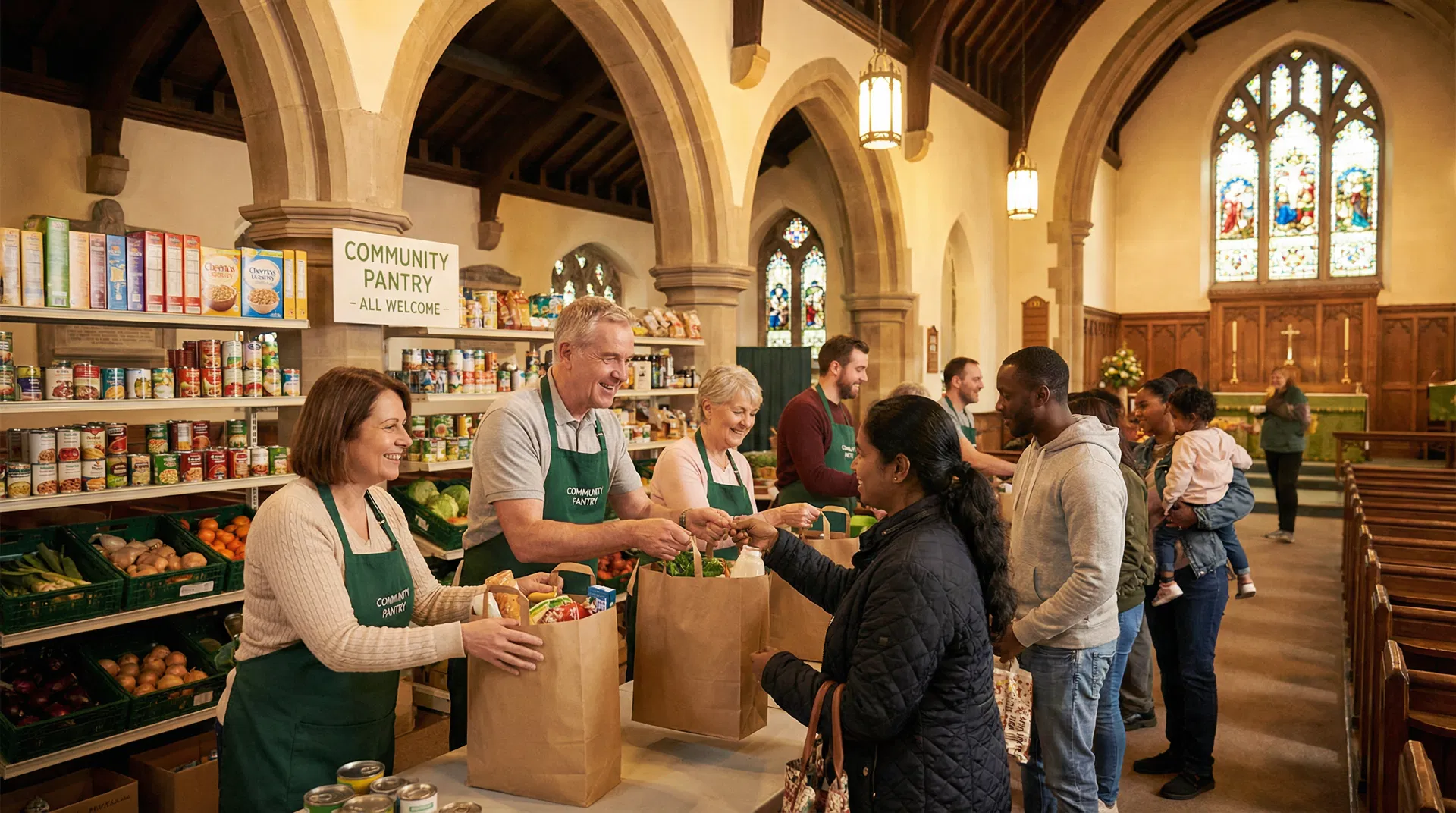
For UK churches running food banks and community pantries, this report is essential reading. The connections between environmental justice and economic justice are not separate concerns — they are deeply intertwined, and the Christian call to care for both creation and neighbour has never felt more urgent.
Read the full report at trusselltrust.org.